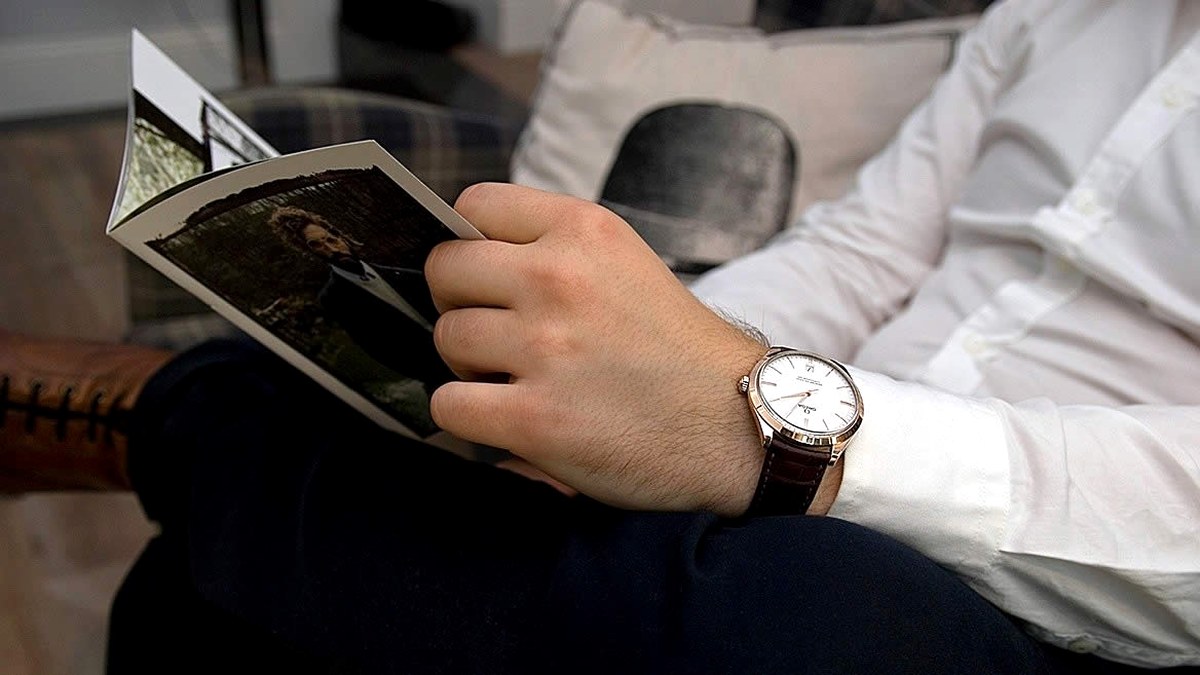
The 2892-A2 earns its reputation through thinness
The 2892-A2 is best understood as a slim automatic base rather than as a magic quality label. Published watch-industry technical catalogues list a 25.60 mm diameter, about 3.60 mm height, 28,800 vph frequency, date display and roughly 42-hour reserve. That thin profile made the family attractive both for elegant three-hand watches and as a base beneath additional modules.
For replica buyers, this geometry explains why a 2892-family claim can be more plausible in a thin dress watch than a thicker 2824-2. It also explains why “uses ETA” is incomplete information: 2824 and 2892 can deliver similar time-and-date functions while shaping the case very differently.
Thin movement, thin tolerance
A thin movement gives designers more freedom, but it also makes poor case engineering easier to spot. If the target reference is elegant and slim while the replica has a deep caseback, tall rehaut or oddly high crown, the movement stack may not match the claim. Modules can add height quickly, especially when chronograph, big-date or other complications are placed above a thin base.
Why modular chronographs complicate identification
The 2892 family has historically served as a base for modular complications. In those watches, the pusher and crown may sit on different horizontal planes because the chronograph mechanism is stacked above the base calibre. That relationship can be a useful visual clue when comparing a replica to a genuine modular chronograph.
Do not confuse “2892-based” with “2894-2” or with Valjoux 7750. These are different architectures. A seller should be able to name the actual calibre rather than use “2892” as a catch-all for any thin automatic chronograph.
Where a 2892-style movement makes sense
A slim date watch, a refined dress watch or a reference whose genuine movement is itself relatively thin can benefit from 2892-like dimensions. In those situations, case proportion may matter more than a decorated bridge pattern. If the replica uses a reliable non-ETA movement with similar geometry, the visual result can sometimes be closer than a genuine ETA forced into the wrong case architecture.
Verification checklist
- Confirm the seller is claiming 2892-A2 specifically, not simply “Swiss ETA.”
- Compare case thickness and crown height with the target reference.
- Inspect date-window radius and hand clearance.
- Ask for a movement photograph and compare bridge/rotor architecture.
- Check timegrapher condition separately from identity.
- Ask who can service the movement in your market.
The 2892 family is often misunderstood because it disappears inside modules
A thin automatic base can be used beneath additional complication modules. Once a module is added, the finished movement stack may no longer be thin at all. This is especially important in replica chronographs and big-date watches. A listing that advertises “2892 base” may be technically true while the complete calibre is much taller and mechanically more complicated than a plain 2892-A2.
Ask whether the seller is naming the base movement or the complete calibre. Then compare the positions of crown, pushers and display apertures. A modular chronograph often places its pushers higher than the base movement’s crown. That visible offset can help distinguish a modular construction from an integrated chronograph.
Why thin dress watches magnify small errors
Dress watches have fewer distractions. A deep rehaut, thick caseback or oversized crown stands out because there is no dive bezel, crown guard or large bracelet to absorb the visual weight. A 1 mm movement-height difference can therefore matter more here than on a chunky sports watch.
When evaluating a 2892-based replica, measure or estimate total case thickness from a side-on photograph. Compare the bezel-to-caseback ratio and the vertical centre of the crown. If the target genuine watch is praised for slimness, that proportion should be a primary QC criterion.
Service value vs architectural value
A genuine 2892-A2 can have strong service value because it is known to watchmakers. But an architecture-specific clone can sometimes place the hands and calendar closer to the genuine reference. There is no universal winner. Buyers should decide whether the priority is long-term repairability or visual/mechanical similarity to the target.
If you choose the serviceable option, accept the visible compromises knowingly. If you choose the architecture-specific option, research parts availability and local watchmaker willingness before the warranty expires.
Small mechanical details that strengthen or weaken a 2892 claim
The 2892-A2 uses central seconds and date in a relatively thin automatic package. When inspecting a movement photo, compare the automatic winding bridge, balance position and rotor bearing rather than relying on engraved words. If a seller shows only the rotor, ask for a second photo with the rotor rotated away from the bridgework. The geometry underneath is harder to fake convincingly than a branded rotor.
Hand height also matters. A dial with applied markers and a tall central stack can require different cannon-pinion and hour-wheel heights. Replica makers sometimes solve clearance problems with taller hand fittings, which can push the hands uncomfortably close to the crystal. A side-lit dial photo can reveal whether the seconds hand clears the minute hand and markers cleanly.
Finally, test the quick-set date and hacking seconds. Those functions are basic to the movement family and provide a useful functional check. They still do not prove ETA identity, but a movement claim that fails its own expected functions deserves immediate skepticism.